
When Zara announced a two-year partnership with John Galliano in March, I wondered what the clothes would actually look like. Collaborations between high-street brands and luxury designers are hardly new, but Galliano seemed like an especially unlikely choice. His work has always involved a certain amount of dressing up, a fondness for strange proportions and clothes that don’t necessarily explain themselves at first glance. Zara, meanwhile, is where you go when you want something you can picture wearing next week. Their first collection together, Re{form}, arrived on October 1, and I’m glad it doesn’t try too hard to make those two worlds meet in the middle.
What I like most about the collection is that it begins with familiar Zara clothes. Galliano took existing garments—among them a wool-mix coat, a cotton shirt and a slip dress—and used them as starting points for new designs. He didn’t simply add a ruffle or an eccentric accessory to make something look more like him. He changed the way the garments are put together. It’s a sensible way to approach a collaboration like this, because the result still feels connected to the brand whose name is on the label.
The tailoring is a good example. The coat with its cropped front, longer back and extended lapels looks almost ordinary in some views, then oddly theatrical when you see it from the side. Even the pockets have been moved farther back. That’s a detail I find especially appealing: pockets are so habitual that you hardly think about them until they’re somewhere unexpected. The coat asks the wearer to make small adjustments to the way they stand and move. Some of the high-waisted trousers and shortened, tailcoat-like jackets have a similar effect. They give the body a silhouette that is quite precise, but not particularly interested in looking sensible.
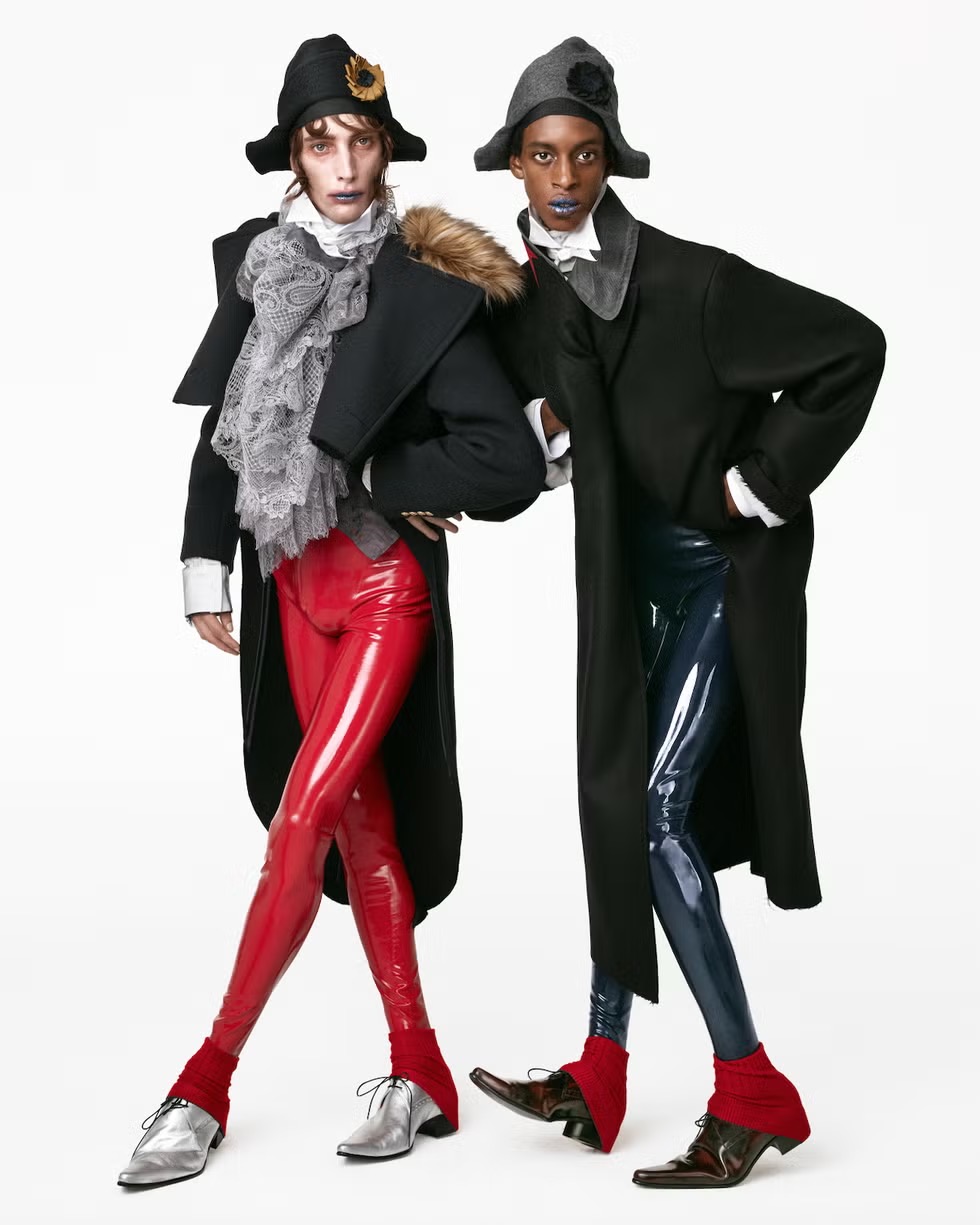
Re{form} tailoring.
There’s a historical flavour to these looks, of course. The coats and high collars recall the Incroyables, the extravagantly dressed figures of post-Revolutionary France who inspired Galliano’s Saint Martins graduation collection back in 1984. But you don’t need to know that history to enjoy what he’s doing here. The slightly misplaced proportions are amusing on their own. So are the hats made with Stephen Jones: caps turned into strange little bonnets, and shapes that seem to have borrowed something from a bicorne. They make the models look dressed for a very particular occasion, one that you can’t quite identify. I think that’s part of the pleasure.
The dresses take the collection somewhere different. I like how the lace, sheer mesh and tulle sit against the stricter tailoring, especially in looks where a delicate layer is worn with a coat that seems almost too formal for it. One of the more memorable design experiments began with a slip dress pulled upward so that its lace gathered around the neck like a jabot. It’s an odd idea, and I can imagine it looking dreadful if handled less carefully. Here it brings some humour to an otherwise romantic piece. A garment usually associated with getting undressed becomes the most elaborate part of getting dressed.
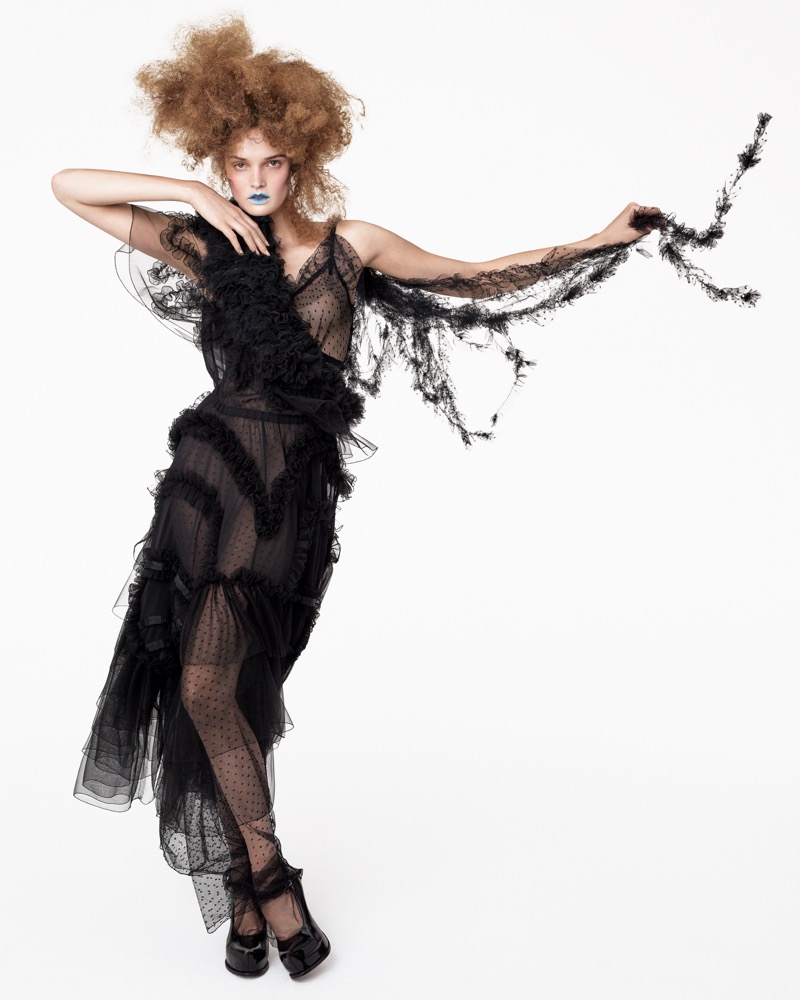
Lace and layered dresses from Re{form}.
The wrap skirts are interesting for a related reason. Instead of sitting neatly around the waist, the layers seem to have been folded and caught in place at different moments. There is a deliberate untidiness to them, but the shape itself has clearly been worked out. That’s a difficult balance to get right. Make everything too polished and the clothes lose their character; leave too much to chance and they can simply look unfinished. I find the collection most convincing when you can see both the experiment and the care that went into resolving it.
Accessories help make sense of the clothes, too. The hats are probably the pieces I’d remember first after looking through the photographs, although I’m not sure I’d have the courage to wear one. The pointed shoes and exaggerated platforms also change the proportions of an outfit in ways that a more conventional shoe wouldn’t. It’s easy to dismiss these details as styling, but they matter when the clothes are so concerned with how a whole figure looks, from the head down to the feet.
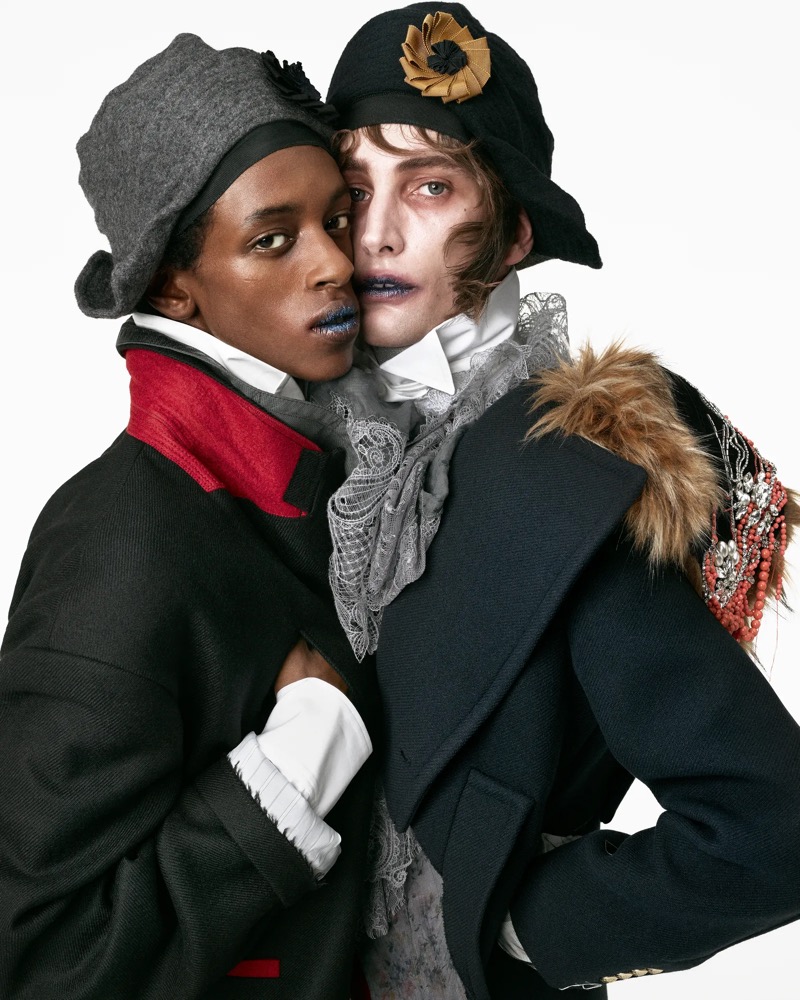
Millinery and accessories from Re{form}.
I do have reservations about how much of this translates beyond the photographs. The campaign images are beautifully put together, but fabric and construction are harder to judge on a screen. A dramatic silhouette can lose a lot when the material doesn’t fall properly, and the collection’s higher prices make those questions more important. I haven’t handled the pieces myself, so I’d be cautious about calling the clothes a success on craftsmanship alone. It’s also worth being clear about the idea of Re{form}: working from existing Zara garments as design prototypes is not necessarily the same thing as making the retail collection out of reclaimed stock.
Still, I find the collection much more appealing than the usual designer collaboration built around a recognisable logo or a few diluted signatures. There are certainly pieces I’d struggle to wear, but the clothes look as if someone enjoyed taking them apart and finding unexpected ways to put them back together. That’s an encouraging start. I’m curious to see whether later collections will continue to explore Zara’s ordinary wardrobe in this way—and whether the garments will be as good to live with as they are to look at.